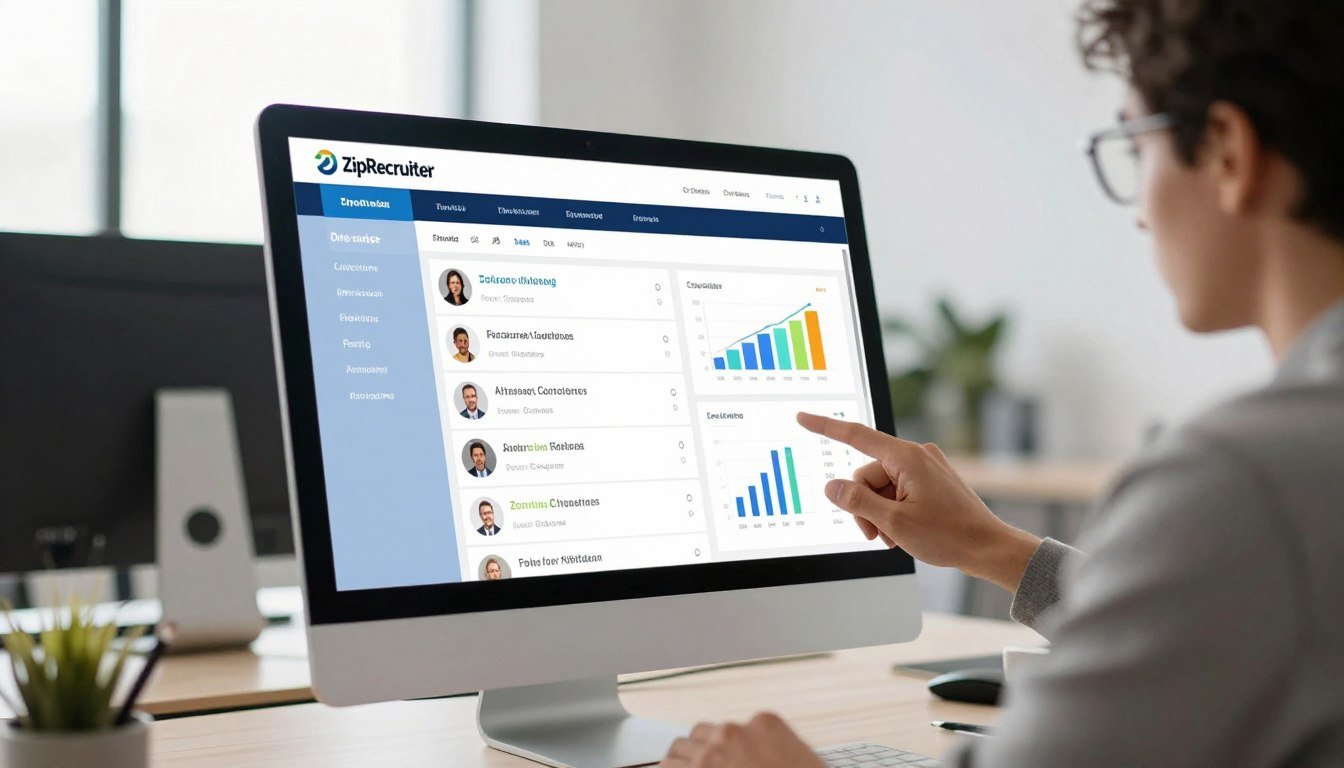
What if you could fill your open positions faster while cutting through the noise of today’s crowded job market?
Finding quality candidates is a major challenge for businesses. The right hiring platform makes all the difference. It connects you with people who are actively looking for work.
ZipRecruiter is a leading AI-powered hiring solution. It serves as a massive marketplace. Employers gain access to a vast pool of ready-to-work job seekers. These individuals use the free mobile app to find new opportunities every day.
The app’s popularity is clear. It has hundreds of thousands of user reviews across major app stores. Job seekers appreciate features like one-tap applications. They get alerts when employers view their profiles.
For companies, the value is in reach. A single job posting distributes to over 100 job boards at once. This saves significant time and money. It puts your opening in front of candidates you might otherwise miss.
ZipRecruiter is designed for the modern hiring landscape. It helps businesses of all sizes compete for talent. The goal is to streamline the entire hiring process from posting to interview.
Key Takeaways
- One job posting reaches candidates across 100+ job boards simultaneously.
- ZipRecruiter uses AI to match employers with qualified, active job seekers.
- Job seekers use a free, highly-rated app with millions of downloads.
- Businesses save time by managing applications through a single dashboard.
- ZipRecruiter is built for today’s competitive labor market and remote work trends.
- You pay for access to quality candidates, not just for posting a listing.
What is ZipRecruiter? An AI-Powered Hiring Platform
At its core, ZipRecruiter transforms how companies find people and how people find work. It functions as an intelligent two-sided marketplace. The service connects hiring businesses with active job seekers through artificial intelligence.
Connecting Employers with a Vast Candidate Pool
For companies, the value begins with massive distribution. You create a single job posting. The system then shares it across hundreds of job boards simultaneously.
This approach reaches candidates who might never visit your career page directly. It saves significant time and expands your talent search. The network effect creates a powerful cycle.
More employers mean more opportunities for seekers. More seekers mean better candidate pools for businesses. This ecosystem benefits everyone involved.
The platform has evolved from a simple job board. Today, it uses smart matching algorithms that learn over time. These algorithms analyze skills, experience, and preferences.
Data shows interesting hiring trends on this service. For example, remote roles attract 2.6 times more unique clicks than in-person positions. This insight helps employers tailor their postings.
Transparency features keep both sides informed. Hiring managers receive notifications when candidates view their postings. This creates a more engaged application process.
How Job Seekers Use the App: The “One-Tap Apply” Promise
For individuals looking for work, the experience starts with a free mobile app. Users set their search parameters by location and keywords. The AI then delivers daily matched job recommendations.
The standout feature is the “One-Tap Apply” functionality. Candidates can submit applications in seconds from their phones. This removes friction from the traditional job search process.
Imagine a nurse seeking a new role in healthcare. They install the app and set preferences for shift work and location. Relevant openings appear in their inbox each morning.
A sales professional might use it differently. They could search for remote positions with specific commission structures. The matching technology learns from their application history.
Notifications provide real-time updates. Job seekers know when employers view their profiles. This two-way transparency builds confidence during the search.
ZipRecruiter describes itself as the only tool of its kind you will ever need. It searches over 100 job boards at once. For many, it has become the central hub for finding new opportunities.
Key Features That Define the ZipRecruiter Experience
The true power of a modern hiring platform lies in its core features. These tools are designed to solve specific pain points for both companies and people looking for work.
They focus on distribution, intelligent matching, and transparent communication. This creates a streamlined hiring process from start to finish.
The Power of the “100+ Job Boards” Network
Imagine writing a single job description. With one click, it appears on Indeed, LinkedIn, Glassdoor, and dozens of niche industry sites. This is the reality of the “100+ job boards” network.
This feature is a massive time-saver for employers. Manually posting to each board takes hours. ZipRecruiter handles the distribution instantly.
The network effect significantly widens your talent pool. You reach passive candidates who browse other platforms. Your listing gets maximum visibility across the digital hiring market.
Specialized boards for tech, healthcare, or sales roles are included. This ensures your opening finds the right professional communities. It goes beyond generic job search sites.
For the cost of one posting, you buy access to an entire ecosystem. This multi-platform approach is a key advantage. It puts your company in front of more qualified applicants.

Smart Matching Technology and Candidate Notifications
Artificial intelligence powers the connection between people and opportunities. The smart matching algorithm analyzes thousands of data points.
It reviews a candidate’s skills, past experience, and location preferences. Then, it compares this data to active job postings. The system learns and improves with every interaction.
Job seekers receive daily email alerts with personalized recommendations. These aren’t random listings. They are roles that closely fit the user’s profile and search history.
This keeps potential employees engaged with new opportunities every day. For someone not actively searching, it can surface the perfect role. It turns a passive seeker into an active applicant.
The technology reduces irrelevant applications for employers. It sends your posting primarily to candidates who meet your criteria. This improves the quality of your applicant flow from the start.
Insights for Employers: When Candidates View Your Resume
Transparency is a two-way street on this platform. Employers gain access to a detailed analytics dashboard. This tool provides real-time data on your posting’s performance.
You can see how many people viewed your listing. The dashboard shows how many applications you received. It even tracks when qualified candidates look at your posting.
This data is invaluable for optimizing your hiring strategy. If views are high but applications are low, your description might need work. You can adjust and repost to attract better talent.
For job seekers, a standout feature is the resume view notification. You get an alert when an employer looks at your profile. This insight is rare on other major job boards.
It tells you your application is being reviewed. This builds confidence during the often stressful search process. You know your materials are getting in front of real hiring managers.
Market data from the platform shows interesting trends. For example, remote roles attract significantly more attention. Tech sector postings for remote work have grown to over 25% of listings.
These features create an efficient hiring ecosystem. They reduce the time to fill open positions. They also connect businesses with higher-qualit candidates for every role.
Who Should Use ZipRecruiter? Target Industries and Roles
Before investing in any job posting service, it’s crucial to understand who benefits most. Not every platform delivers equal value across all industries or for every type of role. The right fit depends on your specific hiring volume, industry competition, and candidate preferences.
This analysis helps employers and job seekers make informed decisions. It shows where the platform excels and where alternatives might be better. The goal is to match your needs with the service’s strengths.
Ideal for High-Volume Hiring in Tech, Sales, and Healthcare
Companies with frequent hiring needs in competitive fields see the best results. The technology sector is a prime example. Platform data shows over 25% of tech postings are explicitly for remote work.
This high adoption rate creates a rich pool of talent. Healthcare organizations also appear on top remote-friendly employer lists. They use the service to recruit nurses, technicians, and administrative staff.
Sales departments benefit from the wide distribution network. They can fill multiple positions quickly across different regions. However, user reviews sometimes mention issues with misrepresented sales roles.
Enterprise organizations gain additional advantages with volume discounts and advanced analytics. They can track hiring trends and optimize their strategies. Small businesses may find the costs higher but still valuable for critical roles.
Customer service roles also perform well on the platform. The high applicant volume helps companies screen for the best fit. This is especially true for remote customer support positions.
Job Seekers in Competitive Markets
Certain candidate profiles achieve more success using this tool. Professionals in competitive industries find it particularly useful. The smart matching algorithms work best for those with clear skills and experience.
Career changers benefit from the broad exposure to different opportunities. Remote work seekers discover numerous options here. Platform data indicates highly educated workers value this flexibility most.
Some professionals earning over $115,000 annually would take a 20% pay cut for remote work. This shows how important location flexibility has become. The platform serves this demand effectively.
Women and minority job seekers particularly value the remote opportunities available. These roles often provide better work-life balance and accessibility. The transparency features also appeal to candidates who want application status updates.
Concrete examples include software developers finding multiple offers. Healthcare systems recruit traveling nurses through the service. Sales organizations expand their teams with qualified representatives.
Limitations for Niche or Local-Only Hiring
Some industries and scenarios see less benefit from this broad platform. Transportation and storage sectors show very low remote work adoption. Less than 2% of their postings offer location flexibility.
Local businesses with strict geographic requirements may struggle. The platform’s strength is national distribution, not hyper-local targeting. A restaurant needing neighborhood staff might find better options elsewhere.
Roles requiring specialized certifications can be harder to fill. The filtering systems may not capture all niche qualifications. Employers in these fields should verify the platform’s capability for their specific needs.
Small local businesses sometimes find the pricing prohibitive for occasional hiring. They might achieve better results with regional job boards or community networks. The value comes from scale and volume.
For purely local hiring without remote options, specialized services often work better. They connect employers with candidates already in the area. This reduces relocation questions and speeds up the interview process.
The guidance is clear: match your hiring needs to the platform’s strengths. High-volume roles in tech, sales, and healthcare work well. Competitive job seekers in these fields benefit most from the exposure.
Understanding the Cost: ZipRecruiter’s Pricing for Employers
Budgeting for recruitment requires a clear understanding of both upfront costs and long-term value. The right investment can save your company significant time and money. It also improves the quality of your new hires.
Different pricing models suit different business needs. Some companies prefer pay-as-you-go options. Others benefit from subscription plans with volume discounts.
Posting Packages vs. Subscription Plans
Employers typically choose between two main approaches. Single job postings work well for occasional hiring needs. This pay-per-post model gives you control over each opening.
Subscription plans offer better value for frequent recruiters. These packages include multiple postings per month. High-volume businesses often receive custom enterprise agreements with additional features.
The platform frequently offers free trials for new customers. This lets you test the service before making a financial commitment. You can evaluate candidate quality and application volume firsthand.
Pricing scales based on your industry and location. Competitive markets may have higher rates. The cost reflects the value of reaching qualified, active job seekers.
Comparing Cost-Per-Hire to Other Platforms
Look beyond the posting fee to calculate true expenses. Traditional staffing agencies charge 15-25% of a new hire’s first-year salary. This can amount to thousands of dollars per position.
Major job boards like Indeed and LinkedIn have different pricing structures. Some charge per click or per application. Others use subscription models with varying feature sets.
The value comes from automated distribution to over 100 job boards. Manually posting to each site would take hours of work. This time savings directly reduces your cost-per-hire metric.
Consider premium visibility options as potential upsells. These can boost your posting’s placement in search results. Not every business needs these enhanced services.
Specialized industry boards might offer lower base rates. However, they often lack the broad reach of larger platforms. Your choice depends on whether you need niche or general talent.
Free Tools and Trials for Job Seekers
People looking for work pay nothing to use the core service. The mobile app and website offer complete access to job search functions. This includes browsing openings and submitting applications.
Job seekers receive alerts when employers view their profiles. They get daily matched recommendations based on their skills. All basic functionality remains free without hidden costs.
This creates a large, active pool of candidates for businesses. The free model encourages more people to join the platform. More seekers mean better opportunities for companies to find talent.
For employers, free trials provide risk-free testing periods. You can post a job and review applicant quality. This helps determine if the service fits your hiring process before payment.
Calculate your return on investment by tracking several factors. Measure how quickly you fill open positions. Compare candidate quality to previous hiring methods.
Also factor in administrative time saved through automated distribution. Faster hiring means less productivity loss from vacant roles. These indirect benefits often justify the investment.
Small businesses should start with single postings to test results. Larger organizations may benefit from subscription plans. Always match your budget to your actual hiring volume and needs.
The Advantages of Choosing ZipRecruiter
The decision to use a specific hiring platform should be based on clear, measurable advantages that directly impact your recruitment outcomes. These benefits translate into faster hiring, better candidates, and significant time savings for your team.
Understanding these concrete advantages helps businesses make informed investment decisions. The value extends beyond simple cost savings to include operational efficiency and improved talent acquisition.
Massive, Rapid Distribution of Job Postings
One posting reaches hundreds of job boards within hours of submission. This eliminates the need for manual posting across individual sites. The time savings alone can be substantial for busy hiring managers.
The network effect creates a powerful cycle that benefits everyone. More employers mean more opportunities for seekers. More seekers mean better candidate pools for businesses. This ecosystem grows stronger with each new participant.
Compare this to traditional methods where each platform requires separate setup. The automated distribution handles everything from a single dashboard. Your opening appears on major sites and niche industry boards simultaneously.
This broad exposure reaches passive candidates who might not be actively searching. They could be browsing other platforms when your listing appears. This significantly widens your potential talent pool beyond active applicants.
High-Quality Applicant Flow for Remote Roles
Remote positions attract exceptional attention on this platform. Data shows these roles receive 2.6 times more unique clicks than in-person opportunities. This increased visibility translates directly into more applications.
Employers consistently report higher satisfaction with applicants for remote positions. These candidates tend to be more educated and experienced. They also demonstrate stronger self-management skills required for remote work.
Platform surveys reveal remote workers are more satisfied with their jobs. They also expect to stay longer in their positions. This reduces turnover costs and improves team stability for companies.
The mobile optimization with one-tap apply functionality increases completion rates. Complex application forms often deter qualified candidates. The streamlined process removes this barrier entirely.
AI matching surfaces qualified professionals who might not be actively searching. The system identifies passive candidates who fit your requirements perfectly. This gives you access to talent you might otherwise miss.
Data-Driven Insights on Hiring Trends
The analytics dashboard provides real-time market intelligence not available elsewhere. You can track salary trends, application rates, and hiring patterns in your industry. This information helps you make competitive offers.
Platform data shows remote work has influenced wage growth patterns. Over two years, it has lowered wage growth by approximately 2 percentage points. This insight helps businesses plan compensation strategies effectively.
Transparency features benefit job seekers through resume view notifications. Candidates receive alerts when employers review their profiles. This feedback loop improves the application experience significantly.
Industry-specific advantages are particularly strong in tech and healthcare. These sectors benefit from targeted candidate pools and specialized distribution. The platform understands the unique needs of different fields.
Concrete success metrics show reduced time-to-hire and improved candidate quality. Businesses report filling positions faster with better-matched professionals. The screening process becomes more efficient through automated tools.
Communication features streamline interactions between employers and applicants. You can manage the entire process from a single interface. This reduces administrative overhead and speeds up decision-making.
The service provides advantages that compound over time. As you use the platform more, the matching algorithms learn your preferences. This creates increasingly accurate candidate recommendations for future openings.
Potential Drawbacks and User-Reported Issues
User feedback reveals several common challenges that both employers and job seekers encounter on this service. A complete picture requires examining these criticisms alongside the platform’s strengths. This balanced view helps you make an informed decision.
Common complaints fall into three main categories. These include job posting quality, customer support experiences, and the transparency of matching technology. Each area presents specific hurdles for different users.

Concerns About Job Posting Quality and Scams
Some users report encountering fraudulent listings on the platform. These scam postings aim to collect personal information or money from applicants. They waste valuable time and create security risks.
Another issue involves the misrepresentation of roles. Certain sales positions appear under different job titles to attract more candidates. This practice frustrates seekers looking for specific opportunities.
Low-quality postings can dominate certain industry sectors. Some fields have few legitimate openings amidst many irrelevant listings. This imbalance makes the search process less efficient for professionals.
Job seekers must remain vigilant when reviewing postings. They should verify employer details before sharing sensitive data. The platform employs filters, but some problematic content slips through.
For businesses, the aggregation model means less direct control over every listing. Third-party postings may not reflect your company’s standards. This can affect your brand’s perception among potential candidates.
User Feedback on Customer Support Challenges
Multiple reviews mention difficulties with customer service. Response times can be slow for both employers and people looking for work. Complex issues sometimes require extensive back-and-forth communication.
One user reported sending 25 emails without resolving their account problem. This highlights a potential gap in support efficiency. Scripted solutions often fail to address unique situations.
Technical glitches add to the frustration. Some applicants encounter errors when submitting materials, even with correct formatting. Notification delivery can be inconsistent across devices.
Account management questions sometimes go unanswered for days. This delay impacts hiring timelines for businesses. It also hinders job seekers waiting for application status updates.
Compared to other services, the support experience varies significantly. Some users receive prompt help, while others face persistent obstacles. Your experience may depend on your specific issue and timing.
The “Black Box” of Smart Matching Algorithms
The platform’s matching technology operates as a “black box” for many users. Job seekers cannot see why certain positions appear in their recommendations. This lack of transparency makes optimization difficult.
Some professionals report poor match accuracy following platform updates. The algorithm may surface irrelevant opportunities despite precise search settings. This reduces trust in the system’s intelligence.
Filtering options have limitations for niche roles or geographic needs. Specific certifications or local requirements might not be captured effectively. This forces users to manually sift through unsuitable postings.
Privacy concerns arise from extensive data collection practices. App store labels detail what information the service gathers and shares. Some users question how their data influences job recommendations.
The evolution toward aggregation affects direct employer relationships. More third-party postings mean fewer connections with hiring managers. This shift changes the dynamic of the application process.
These drawbacks represent real considerations for any hiring tool. They balance against the platform’s significant advantages in distribution and reach. Understanding both sides ensures realistic expectations.
Top Alternatives to ZipRecruiter and When to Consider Them
While many employers focus on a single hiring platform, the smartest strategy often involves comparing multiple services. Different job boards excel in specific areas like candidate quality, industry focus, or pricing models. Understanding these alternatives helps you build a more effective recruitment plan.
This analysis covers three major categories of competing services. Each offers unique advantages for certain hiring scenarios. The goal is to match your needs with the right tool for each open position.
Indeed: The Giant for Organic Search Traffic
Indeed dominates the hiring market through massive organic search traffic. Job seekers naturally visit the site when looking for new opportunities. This creates a huge pool of active applicants for every posting.
The platform offers a free basic posting model for employers. You can list openings without upfront costs. This makes Indeed particularly attractive for businesses with tight recruitment budgets.
Paid sponsorship options are available for increased visibility. These work well for competitive roles or urgent hiring needs. The pricing structure differs significantly from subscription-based services.
User reviews frequently compare Indeed favorably for customer service experiences. Some professionals recommend it for people actively on the market. The organic approach reaches candidates who might avoid paid distribution networks.
Consider Indeed when you need high applicant volume quickly. It works best for general roles rather than highly specialized positions. The free model allows testing before committing financial resources.
Regional and local job boards often integrate with Indeed’s network. This provides additional geographic targeting for location-specific roles. These connections help businesses reach candidates already in their area.
LinkedIn Jobs: The Leader for Professional and Network-Based Hiring
LinkedIn Jobs leverages professional networks and verified profiles for candidate matching. This creates a more qualified applicant pool for many roles. The platform excels at connecting employers with credentialed professionals.
Network referrals and industry connections provide significant advantages. Employees can share openings within their professional circles. This often surfaces passive candidates not actively searching job boards.
The service is particularly effective for roles requiring verified experience or specific credentials. Management positions, technical leadership, and specialized consulting roles perform well here. Candidate quality generally exceeds volume-focused platforms.
Integration with company career pages creates a seamless application experience. Applicants can use their existing LinkedIn profiles to apply quickly. This reduces friction in the submission process.
Consider LinkedIn Jobs when hiring for senior or specialized positions. It’s ideal for roles where professional reputation matters. The network effect provides social proof that other platforms lack.
Mobile experience and communication tools facilitate direct contact with candidates. Recruiters can message potential hires through the platform. This speeds up the initial interview scheduling process.
Specialized Boards (e.g., Dice, Built In) for Tech Roles
Niche job boards deliver targeted candidate pools for specific industries. Dice serves the technology sector with highly specialized listings. HealthcareSource focuses exclusively on medical and healthcare roles.
These platforms understand the unique language and requirements of their industries. They attract professionals deeply embedded in those fields. This results in applicants with precisely matching skills and experience.
Built In connects tech companies with developers, engineers, and product managers. The community aspect creates engagement beyond simple job listings. Candidates often research companies through the platform’s content.
HigherEdJobs serves academic institutions seeking faculty and administrative staff. The specialized nature ensures applicants understand educational environments. This reduces time spent explaining institutional culture.
Consider specialized boards when hiring for technical or niche positions. They outperform general platforms for roles requiring specific certifications. The candidate quality justifies potentially higher posting costs.
Many specialized services offer integration with applicant tracking systems. This streamlines the hiring workflow for busy recruitment teams. The focused approach reduces time spent screening unqualified applicants.
A multi-platform strategy often delivers the best results for diverse hiring needs. Use general boards for high-volume roles requiring broad reach. Reserve specialized services for technical positions needing precise skill matching.
Evaluate each alternative based on your industry, hiring volume, and available resources. Different services excel in different scenarios. The right combination accelerates your hiring while improving candidate quality.
Conclusion: Is a ZipRecruiter Job Posting Right for Your Needs?
Choosing the optimal job posting service requires balancing reach, cost, and candidate quality. This platform delivers exceptional value for high-volume hiring in competitive fields like tech and healthcare.
Businesses needing broad distribution for remote roles will find the network effect powerful. The service connects employers with active seekers efficiently.
Consider alternatives for niche industries or strictly local positions. The cost justifies itself when filling multiple openings quickly.
Test with a single posting to gauge applicant quality before committing. Monitor how candidates respond to your listing. This practical step reveals if the tool matches your hiring workflow.
Ultimately, your success depends on aligning the platform’s strengths with your specific recruitment challenges. Make an informed choice based on your company’s unique needs.
FAQ
How does the platform get my job in front of candidates?
It uses a network of over 100 job boards to post your opening widely. Its matching technology then actively notifies qualified individuals, putting your role directly in their search results and inboxes.
Is there a free option for people looking for work?
Yes, job seekers can use the service at no cost. They can search listings, create profiles, and use features like one-tap apply to submit applications quickly to various employers.
What kind of hiring is this tool best suited for?
It excels in high-volume recruitment for common roles in fields like sales, customer service, healthcare support, and technology. It’s ideal for filling multiple positions fast and finding talent for remote opportunities.
How do the costs work for a company that needs to hire?
Employers typically choose between pay-per-post packages or subscription plans. This allows businesses to control their budget and compare the cost-per-hire against other major hiring websites.
What’s the main benefit compared to a site like Indeed?
The key advantage is aggressive distribution. While Indeed gets organic search traffic, this platform pushes your posting across its vast network and uses AI to promote it to targeted candidates, which can speed up the hiring process.
Are there any common complaints from users?
Some users report seeing low-quality or duplicate postings. Others desire more transparency into how the smart matching works. As with any large board, it’s wise for applicants to research companies before applying.
When should I consider a different job board instead?
For highly specialized or executive roles, consider LinkedIn Jobs. For very niche tech or local industry jobs, a specialized or regional board may yield more targeted applicants than a broad, high-volume platform.